
Which sign language does the Pixel 11 read? American, and only American
Google's sign-to-text feature turns ASL into written English. Portuguese Sign Language is not part of it, and a month after the Portuguese launch there is still no per-feature language list for the rest of Gemini.
When the Pixel 11 reached Portuguese shops in August, one question went unanswered: does the artificial intelligence that fills the whole presentation actually work in Portuguese? For one feature there is now an answer, and it is narrower than the launch suggested.
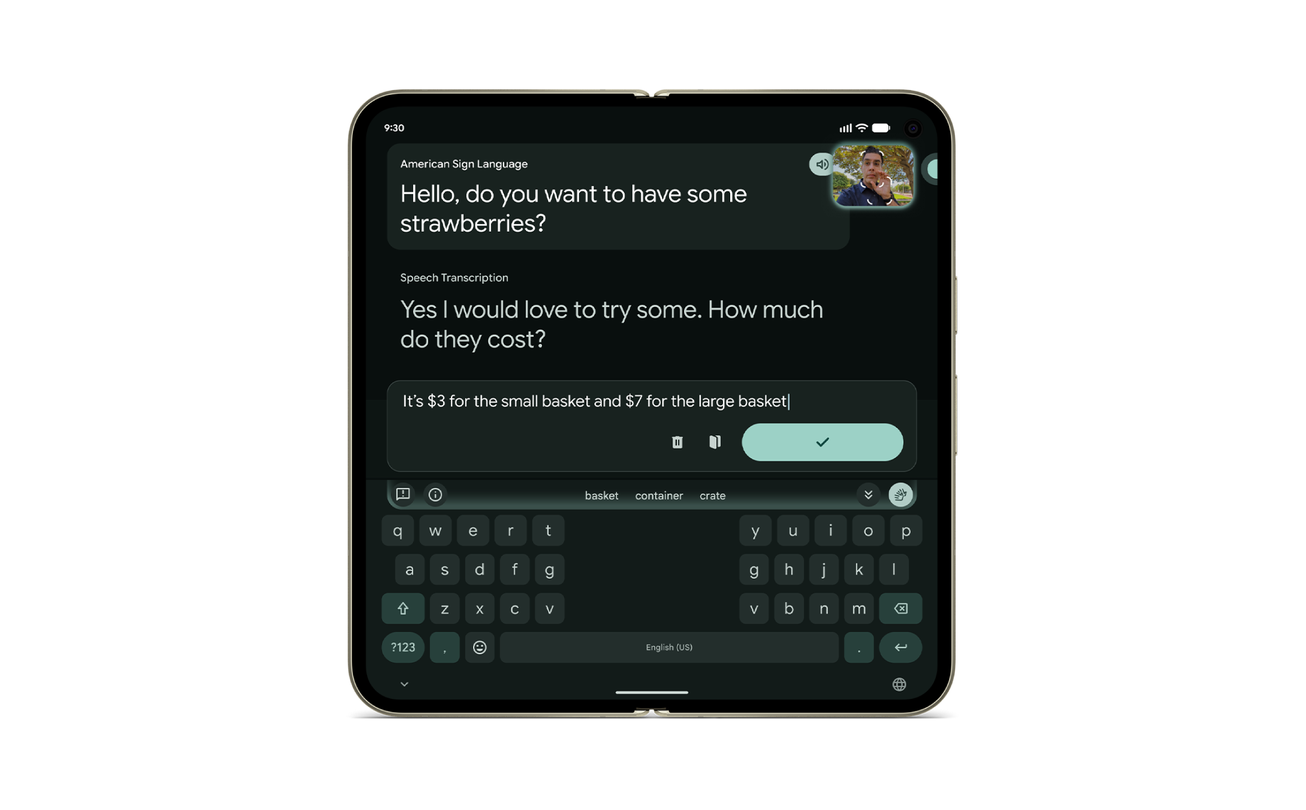
Sign-to-text, sold as one of the range’s headline accessibility wins, reads American Sign Language and writes English. This is not a market rollout waiting on a switch somewhere. It is how the thing is built. Google says the feature runs on a DeepMind sign-language model and that it translates ASL into written English sentences in real time, reading hand shapes, facial expression and body movement. One-handed and two-handed signing both work. You add it to the Gboard toolbar, sign to the front camera, and the words land on the outer display.
For anyone who signs in Língua Gestual Portuguesa, none of that helps.
Why the adjective matters here
Portuguese Sign Language is not an accent of ASL and it is not a translation of it. It is a language with its own grammar, and it has sat in the Portuguese Constitution since the 1997 revision, named both as cultural expression and as a route to education and equal opportunity. A phone sold in Portugal that promises to translate signing and only understands another country’s signing is not a phone with a feature waiting to be enabled. It is a phone with a feature that was never aimed here.
To be fair about it, nobody promised LGP. The problem runs the other way. Launch material talks about sign-language translation with no adjective attached, and the adjective only turns up on the page almost nobody opens.
What about the rest of Gemini?
When we went through the Portuguese prices, the point was this exact thing: nearly everything Google announced carried a footnote reading “select countries and languages”, and the list never materialised. A month on, it still has not.
Google’s own Pixel translation support page does not publish it either. What it does publish is the hardware map, which is useful in its own way. Text and app translation goes back to the Pixel 6, call translation to the Pixel 10, and translating videos, podcasts and social media runs on the Pixel 11 only — in selected apps, and never on music. Which languages, in which case, is still something you find out in the settings menu after paying.
None of this turns a good phone into a bad one. It is simply the gap between what the stage promises and what lands here, and it is cheaper to measure before the thousand euros than after.
By Oliver Grant
Image: Google