
House prices in Portugal: the tracker
A running tracker of Portugal's housing market — the INE price index, bank valuations, rents and affordability. Updated with each new data release.
We gather here, in one place, how Portugal’s housing market is moving. Instead of one article per data point, we update this page with the essentials: the INE price index, bank valuations, rents and affordability for buyers and renters — which since 1 August also runs through the new mortgage rules, with the debt-service cap down to 45%. Official data is at INE.
Updates
25 September 2026
The gap between wages and house prices got sharper: between Q2 2025 and Q2 2026, the average gross salary rose 5.1 percent (1.8 percent above inflation) to 1,835 euros, while house prices climbed 16.5 percent over the same period, more than triple. Over the past decade the gap is wider still: wages grew 48 percent while house prices nearly tripled, up 182 percent, according to INE and idealista.
24 September 2026
The INE house price index slowed again: prices rose 16.5% year on year in the second quarter, down 1.3 percentage points from 17.8% in the first quarter. Existing homes are still climbing faster, up 18%, against 12.3% for new builds. Portugal sold 40,142 homes between April and June, down 6.4% on a year earlier and the third straight quarterly fall, yet the money changing hands grew 4.2%, to 10.7 billion euros, and the average price hit a new record of 266,475 euros. Foreign buyers pulled back too: 1,890 purchases, 4.7% of the total, down 10.3% in a year. By region, sales fell hardest in Madeira, down 15.2%, and the Algarve, down 12.4%; only the Alentejo grew in transaction value, up 20.2%.
18 September 2026
The implicit interest rate on Portuguese mortgages rose to 3.162% in August, up 2.7 basis points on July and the fourth monthly rise in a row, according to INE. The average monthly payment reached 418 euros, four more than in July and 24 more than in August last year, and the split inside that figure is the part worth keeping: 209 euros of interest against 209 euros of capital, so half the payment is still buying no house at all. Loans signed in the last three months look nothing like the average, at 744 euros a month and 14.3% more than a year ago, on an average outstanding balance of 185,812 euros against 80,188 euros across all mortgages. The next update lands on 21 October.
2 September 2026
Portuguese banks lent 2.3 billion euros for house purchases in July, the highest monthly figure on record, according to Banco de Portugal. The same month brought 13.7 billion euros into new term deposits, also a record, with the rate rising for a sixth consecutive month. The two ends tell one story: those who can buy are borrowing more, and those who cannot are parking the money. A McKinsey Global Institute study published on Wednesday supplies the ending — Portuguese households’ net wealth per head fell 1.6 percent between 2024 and 2025, against a record high globally.
27 August 2026
Bank valuations hit another record in July: a median of 2,240 euros per square metre, 12 euros above June and 15.2 per cent above the same month in 2025, according to INE. Greater Lisbon sits 51.7 per cent above the national median at 3,397 euros, up 441 euros year on year. The steepest annual rise was on the Setúbal Peninsula at 20.4 per cent, from 2,310 to 2,781 euros. Apartments came in at a median 2,627 euros per square metre, up 16.5 per cent, from a sample of 34,053 valuations.
19 August 2026
There is now a single number that captures Portugal’s housing squeeze better than any price index: in Faro, the average rent eats 101% of a household’s net income. The salary simply does not cover it. Idealista’s second-quarter data puts the national effort rate at 82% for renters and 76% for buyers with a mortgage, far above the 33% ceiling usually treated as prudent. Behind Faro on rents come Funchal (99%), Lisbon (80%) and Porto (69%), and only Portalegre (30%) sits inside the recommended band. On buying, Funchal is the extreme case at 115%, followed by Lisbon (99%), Faro (84%) and Porto (82%).
17 August 2026
Buying and renting have stopped moving together. Sale prices are up 11.2 per cent over a year while rents rose 3.6 per cent in the same period, a gap of seven and a half points between the two markets. Infocasa data show a rental market that has essentially stalled in the short term: 87.9 per cent of listed flats did not change price in the last 30 days, 9 per cent came down and only 3 per cent went up. On average asking rents, two-bedroom flats lead in absolute terms at 1,577 euros a month, ahead of three-bedrooms at 1,842 and one-bedrooms at 1,231; per square metre, though, the one-bedroom is dearest at 22 euros/m2 against 18.63 and 15.66.
8 August 2026
The gap between buying and renting now has fresh numbers on it. An analysis published this week by consumer body DECO PROteste Investe puts house prices up 11.2% year on year, against just 3.6% for rents. It is the trend that was already there, only starker: buyers face double-digit appreciation while renters see increases much closer to inflation. For anyone buying to let, the arithmetic is uncomfortable — the entry price is climbing faster than the income the property throws off.
6 August 2026
Rents reversed course. After six consecutive monthly falls, asking rents rose 0.9% year on year in July to a median €17.7 per square metre, according to idealista. And the top of the table changed hands: the Algarve overtook Greater Lisbon to become the country’s most expensive region to rent in, at €22.5/m2. On the sales side, the month closed on a ninth straight monthly record — we covered that part in detail separately.
28 July 2026
Asking prices climbed again in July. The average listing price for sale reached 435,000 euros, up 1.4% on June and 2.4% on July last year. Rents moved faster: 1,350 euros a month, up 3.8% both on the month and on the year. The map keeps splitting in two — Braganca and Portalegre led the month’s gains, while Lisbon and Porto are showing signs of stabilising after years of dragging the national average upwards.
25 July 2026
Bank valuations of Portuguese housing hit a new high in June: 2,228 euros per square metre, up 16.6% on the same month of 2025, according to INE. On the sales side the market picked up again, with 39,210 homes traded on the mainland between April and June, around 7% more than in the previous three months. More buying and higher valuations at the same time is not usually the run-up to a correction.
24 July 2026
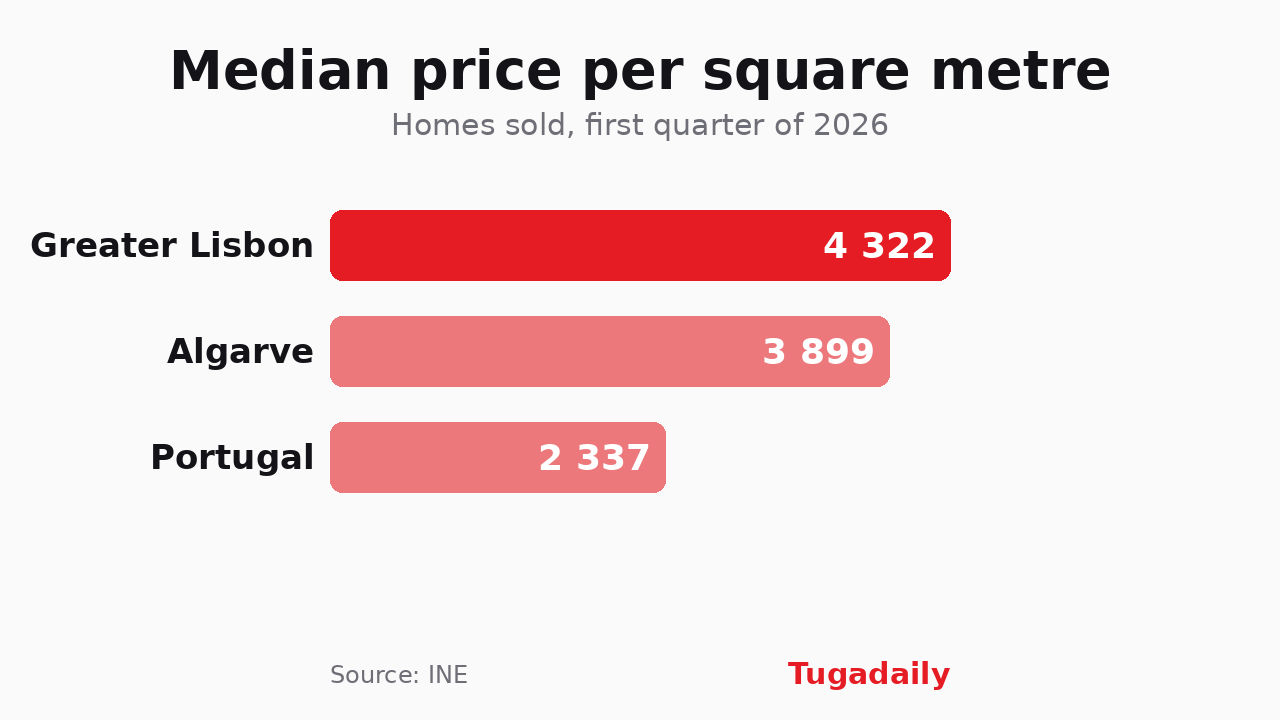
Fewer sales, ever-higher prices. The supply of homes for sale in Portugal fell about 6% through June, according to Idealista, keeping pressure on prices even as demand cools. INE’s figures for the start of 2026 tell the same story: fewer homes changed hands, down roughly 10% quarter-on-quarter, yet the median price hit a fresh record near 2,337 euros per square metre.
22 July 2026
The supply of homes to rent in Portugal fell 22% in the second quarter from a year earlier, to about 40,700 long-term listings, according to Idealista, staying roughly flat versus the previous quarter. The sharpest drops were in Coimbra (-58%), Porto (-52%) and Lisbon (-27%), yet supply actually rose in 14 of the 20 territories tracked, led by Beja (+65%), Madeira (+50%) and Braganca (+44%).
20 July 2026
Idealista closed June with asking prices at yet another high: 3,156 euros per square metre, the eighth consecutive monthly record. Annual growth slowed from 10.2 to 8.9 per cent — moderation, not relief: Lisbon sits at 4,724 euros/m2, Faro at 4,069, and the shortage of supply keeps blocking any correction.
19 July 2026
INE’s full-year 2025 data confirms a two-speed market: 169,812 homes were sold (+8.6%) for a record 41.2 billion euros (+21.7%, the highest since the series began in 2009), and the median price climbed 16.8% to 2,076 euros/m2. On the rental side, 149,628 new contracts (+5.4%) and a median rent of 9.29 euros/m2 (+9.7%) grew at barely half the pace of sale prices. One telling detail: only 86.2% of purchases involved a bank valuation, down from 89.7% in 2024 — ever more homes are being bought without a mortgage.
Housing costs are pushing young people into second jobs: a study reported this week by the sector press found four in ten 18-to-35-year-olds juggle more than one job to cover their bills. Among young renters, nearly half spend over 30% of their income on rent alone — the threshold experts define as housing overburden.
3 August 2026
A ninth straight record, this time with the brakes on harder: the median asking price reached €3,210/m2 in July, up 8% year on year (from 8.9% in June) and just 0.4% on the quarter. Lisbon rose least of any capital (+4.1%) and stays the priciest at €6,260/m2, against Castelo Branco’s €1,041. The year’s steepest rises are all inland: Viseu (+20.2%), Portalegre (+19.9%) and Guarda (+18.7%). Full breakdown in July house prices.
18 July 2026
Portugal’s statistics office confirmed what the market was already shouting: in Q1 the median price of homes actually sold hit 2,337 euros/m2, an all-time record, after rising 19.8% in a year — and accelerating (17.5% the previous quarter). Sales fell 10.5% to 35,953 homes, with foreign buyers paying a median 3,000 euros/m2 against residents’ 2,313. Lisbon (5,292), Cascais (5,000) and Oeiras (4,511) lead; Guimarães was the fastest-rising large municipality (+41.9%).
17 July 2026
Where can you still rent cheaply? Idealista ran the numbers on second-quarter data and Castelo Branco leads with median rents of 7.4 euros per square metre, followed by Bragança (7.5), Viseu (7.7), Santa Maria da Feira (8.1) and Barcelos (8.3) — in all, more than a dozen municipalities sit below 10 euros/m2, from Famalicão to Tomar. At the other end, Lisbon remains untouchable at 21.8 euros/m2, ahead of Cascais (20.5), Sines (18.9), Loulé (18.1) and Oeiras (17.3).
16 July 2026
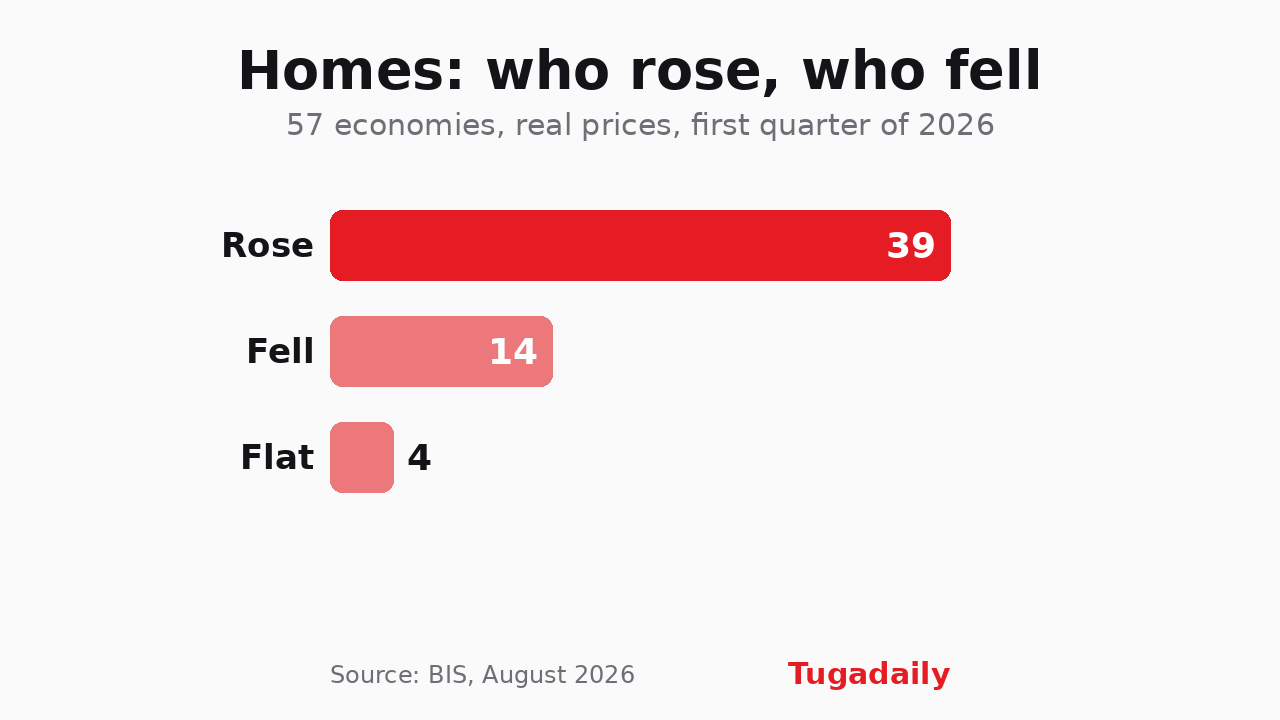
S&P now forecasts Portugal will post Europe’s biggest house-price rise in 2026 — the agency updated its projections this week, in a country that had already closed Q1 with 16.5% annual growth, the fourth-highest in the world. For house-hunters the message hasn’t changed: waiting for prices to fall still isn’t a strategy.
The second quarter brought the correction everyone sensed coming: according to idealista, average asking prices fell 3.4% quarter on quarter to 3,544 euros per square metre, and rents dropped 4.2% to 15.46 euros. Homes are also taking longer to sell — 184 days on average, up 54% — yet the strain on families remains brutal: a two-bed mortgage payment absorbs about 49% of an average couple’s net income. And the dip isn’t universal: 10 districts plus the Azores still rose.
11 July 2026
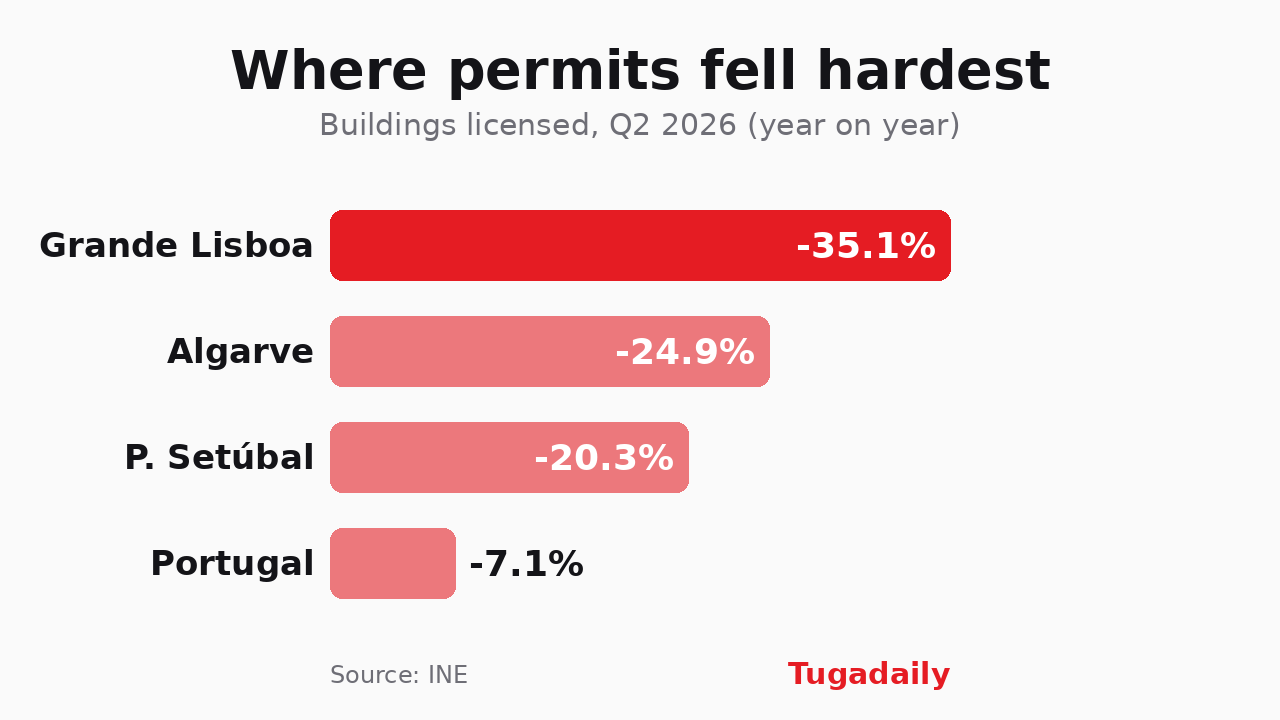
A yellow light on the supply side: Portugal’s statistics office INE counted just 6,586 licensed construction and rehabilitation projects through April, down 7% on the same period of 2025, while new-housing construction costs rose 6.9% year-on-year in May. Fewer permits plus pricier building is a recipe that usually ends somewhere familiar — more price pressure down the road.
10 July 2026
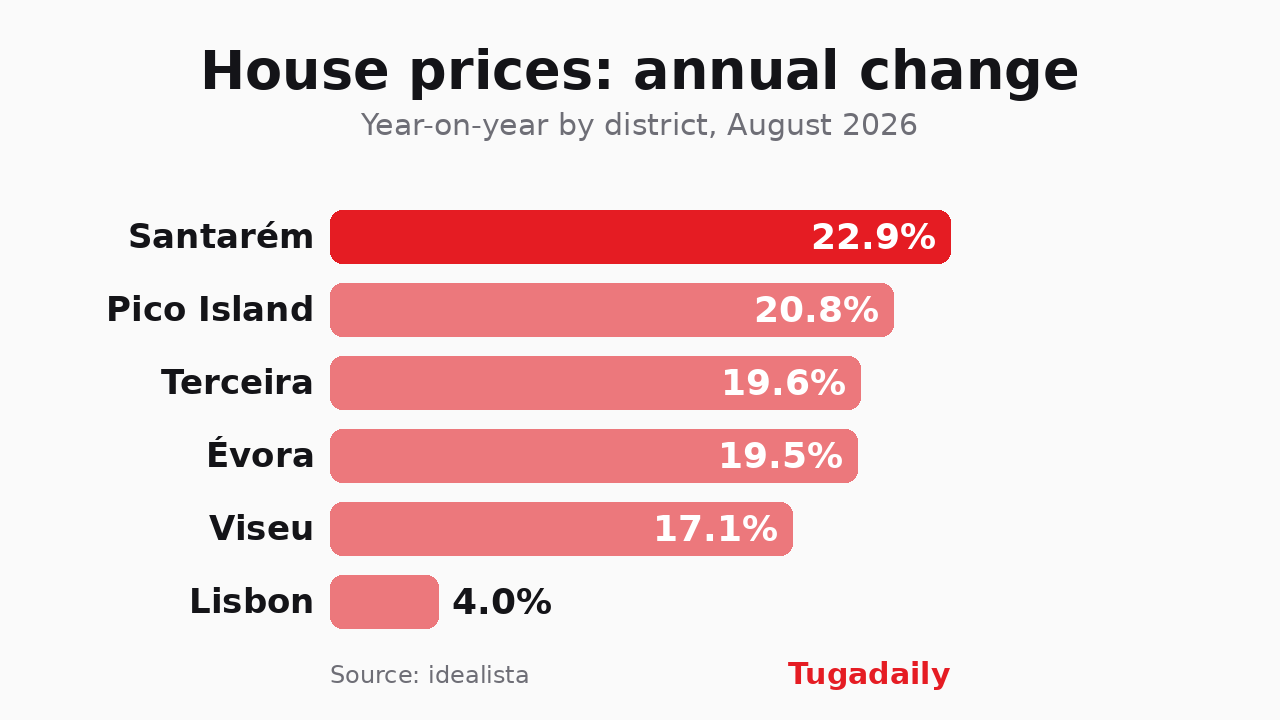
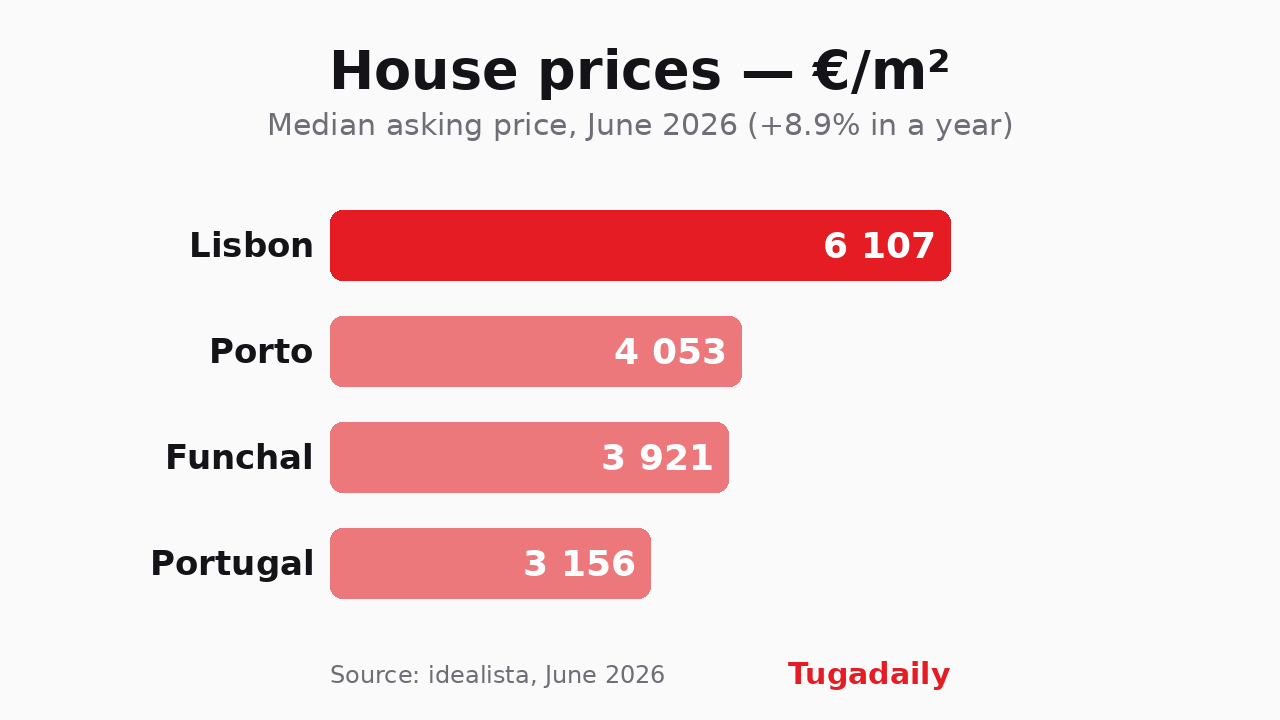
House prices rose 8.9% year-on-year in June, according to idealista — the eighth consecutive record high, with the square metre at €3,156. The pace eased (from 10.2% in May), but prices rose in all 20 district capitals and autonomous regions, led by Portalegre (+25.8%), Castelo Branco (+24.3%) and Santarém (+24.2%). Lisbon still tops the table at €6,107/m2, followed by Porto (€4,053) and Funchal (€3,921).
9 July 2026
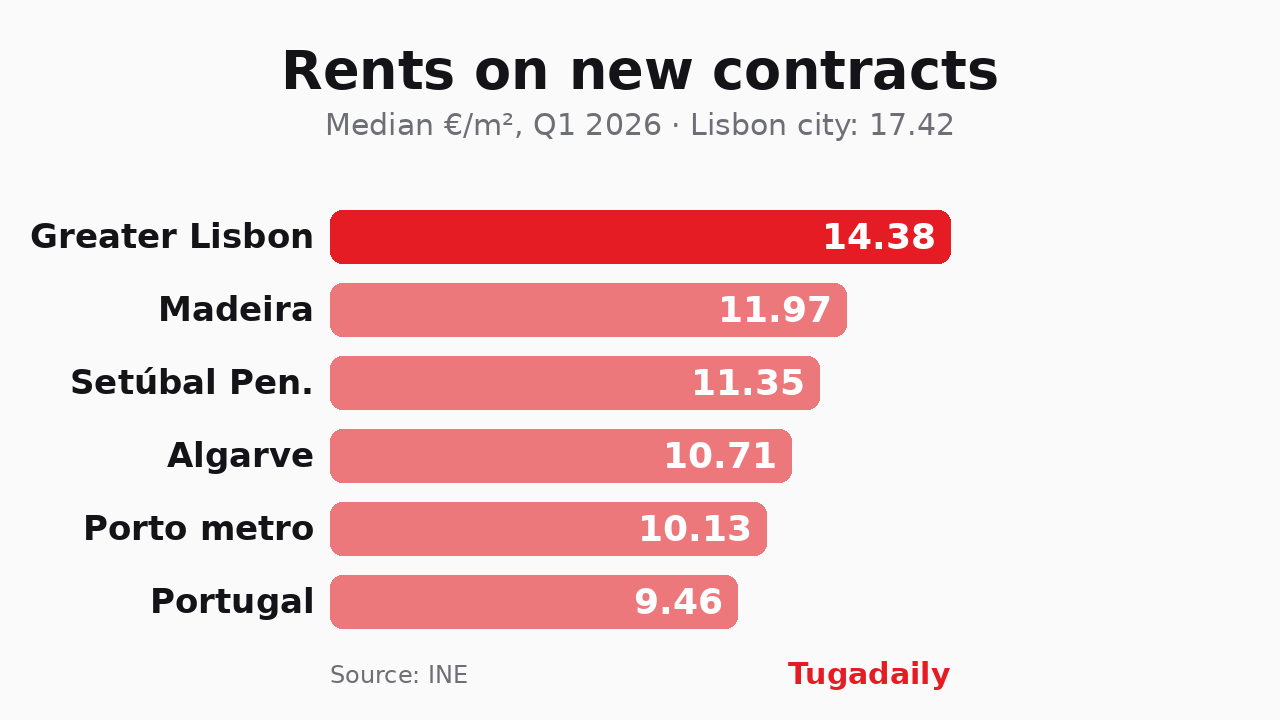
Idealista: in May the median asking price stood at 3,142 euros/sqm and the average listed value rose to about 430,500 euros (+3.7% year on year), though sales and prices are cooling. On rentals, the national median rent reached 9.46 euros/sqm in Q1 (+9.1%), with Lisbon nearly double that (17.42 euros/sqm).
8 July 2026
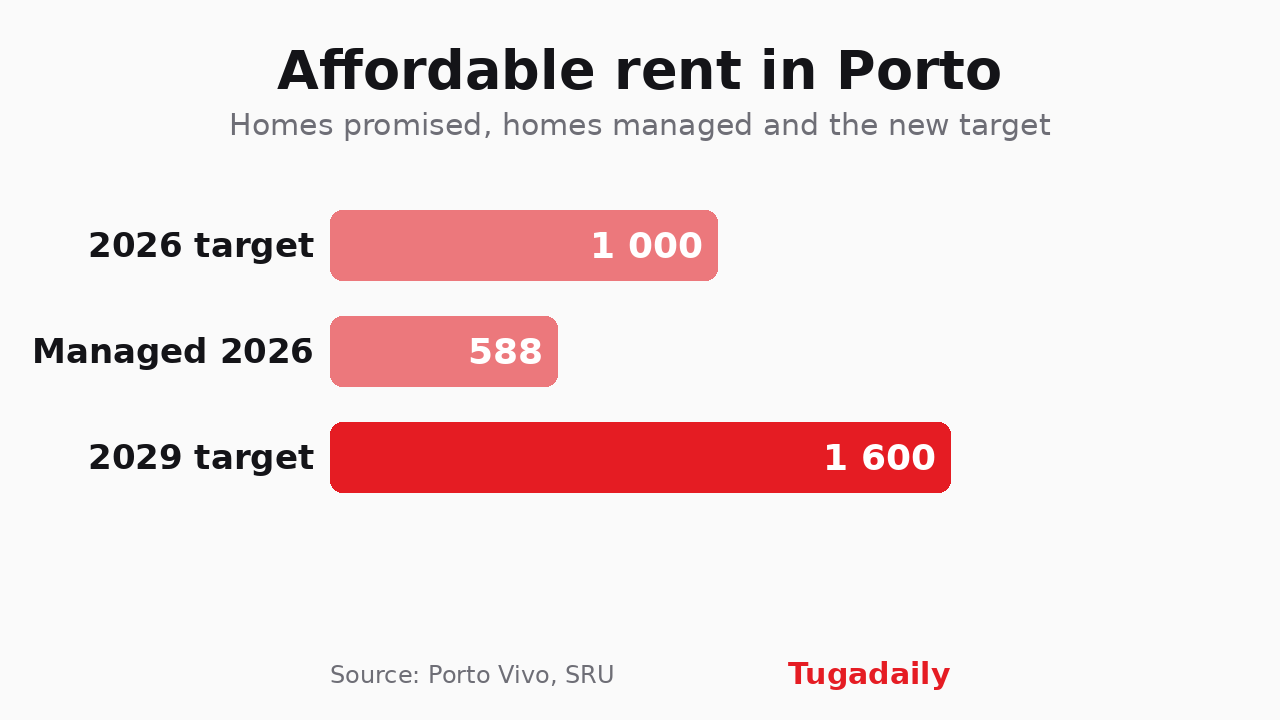
Porto Vivo will put another 159 affordable-rent homes on the market by December, taking the below-market units it manages to 588 by the end of 2026. On the sales side, the average asking price hovered around 430,000 euros in May, up 3.7% year on year, while first-quarter transactions fell 8.7% — prices rising, activity cooling.
6 July 2026
The average asking price for homes reached 430,500 euros in May, up 3.7% year on year, according to Imovirtual’s price report — but the market is showing clear signs of cooling. In the first quarter, sale prices even dipped slightly while rents rose in most districts. The regional gap in mortgage payments remains huge: Aveiro has the highest average monthly payment (near 967 euros) and Viseu the lowest (around 398 euros), a difference of almost 570 euros a month.
Infographic: Tugadaily · idealista data